

New FAO handbook empowers veterinary services to manage animal health emergencies
The Food and Agriculture Organization (FAO) has released a comprehensive new handbook aimed at strengthening the capacity of veterinary services worldwide to prepare for and respond to animal health emergencies.
The publication, titled Manual for the Management of Operations during an Animal Health Emergency, provides practical guidance, tools and operational frameworks to help countries better manage disease outbreaks and other livestock-related crises.
Developed under FAO’s animal health programmes, the handbook is part of broader efforts to enhance global preparedness amid rising threats from transboundary and emerging animal diseases.
According to the FAO manual, animal health emergencies—ranging from disease outbreaks to disasters affecting livestock systems—are increasing in frequency and complexity, with significant implications for food security, livelihoods and trade.
The handbook responds to the urgent need for structured and coordinated systems that can effectively manage such crises at local, national and international levels.
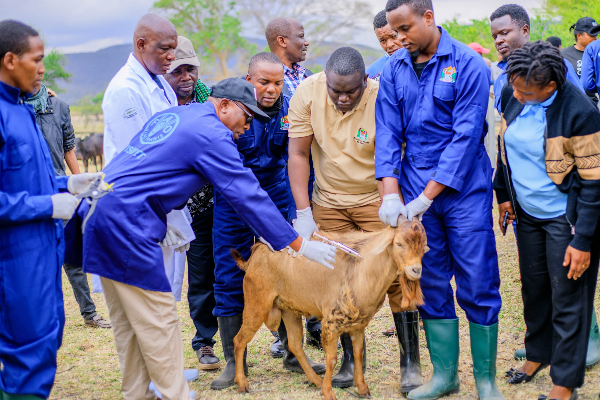
The guide offers step-by-step recommendations for veterinary authorities and emergency responders, covering preparedness, response and recovery phases.
It emphasizes the importance of establishing clear operational frameworks, including defined roles, communication systems and resource management mechanisms to ensure rapid and effective action during emergencies.
A key feature of the handbook is its alignment with FAO’s Good Emergency Management Practice (GEMP) approach, which promotes a systematic cycle of prevention, detection, response and recovery. This framework is designed to help countries build resilient systems capable of minimizing the impact of disease outbreaks before they escalate into major epidemics.
The manual also adopts a “One Health” approach, recognizing the interconnectedness of animal, human and environmental health. By integrating these dimensions, it supports coordinated responses to zoonotic diseases and other risks that can cross species and borders.
Importantly, the handbook is designed to be adaptable. FAO notes that countries can use it as a foundation to develop or refine their own emergency management systems, tailoring strategies to national contexts and capacities.
It includes practical examples, templates and operational guidance to support decision-making during both peacetime preparedness and active emergency situations.
Experts highlight that effective preparedness planning—such as developing contingency plans and conducting simulation exercises—is critical to reducing response times and improving outcomes during outbreaks.
Without such systems in place, animal disease emergencies can have severe socio-economic consequences, particularly in countries heavily dependent on livestock production.
The handbook further underscores the need for strong coordination among stakeholders, including government agencies, veterinary services, laboratories and international partners. It also stresses the importance of capacity building, training and continuous evaluation to ensure systems remain responsive to evolving threats.
FAO’s latest resource comes at a time when global livestock systems are under increasing pressure from climate change, intensified production and growing animal movement and trade—all factors that contribute to the spread of infectious diseases.
By equipping veterinary services with practical tools and standardized approaches, the new handbook is expected to enhance countries’ ability to contain outbreaks quickly, protect livelihoods and safeguard food systems.
Observers say the initiative reinforces FAO’s ongoing commitment to strengthening animal health systems as a cornerstone of global food security and resilience, particularly in regions where livestock plays a vital economic and social role.