


Kenya targets new markets as floriculture sector shows strong resilience amid global challenges
In summary
The exhibition underscores Kenya’s ambition to expand its global flower footprint despite rising production and trade challenges.
Held in Nairobi, the gathering highlights renewed confidence in Kenya’s flower industry as it seeks new global markets.
The event brings together global players at a time when Kenya is pushing to strengthen its position in international floriculture trade.
The showcase reflects growing optimism in Kenya’s flower sector amid efforts to navigate cost pressures and expand exports.
By Zablon Oyugi
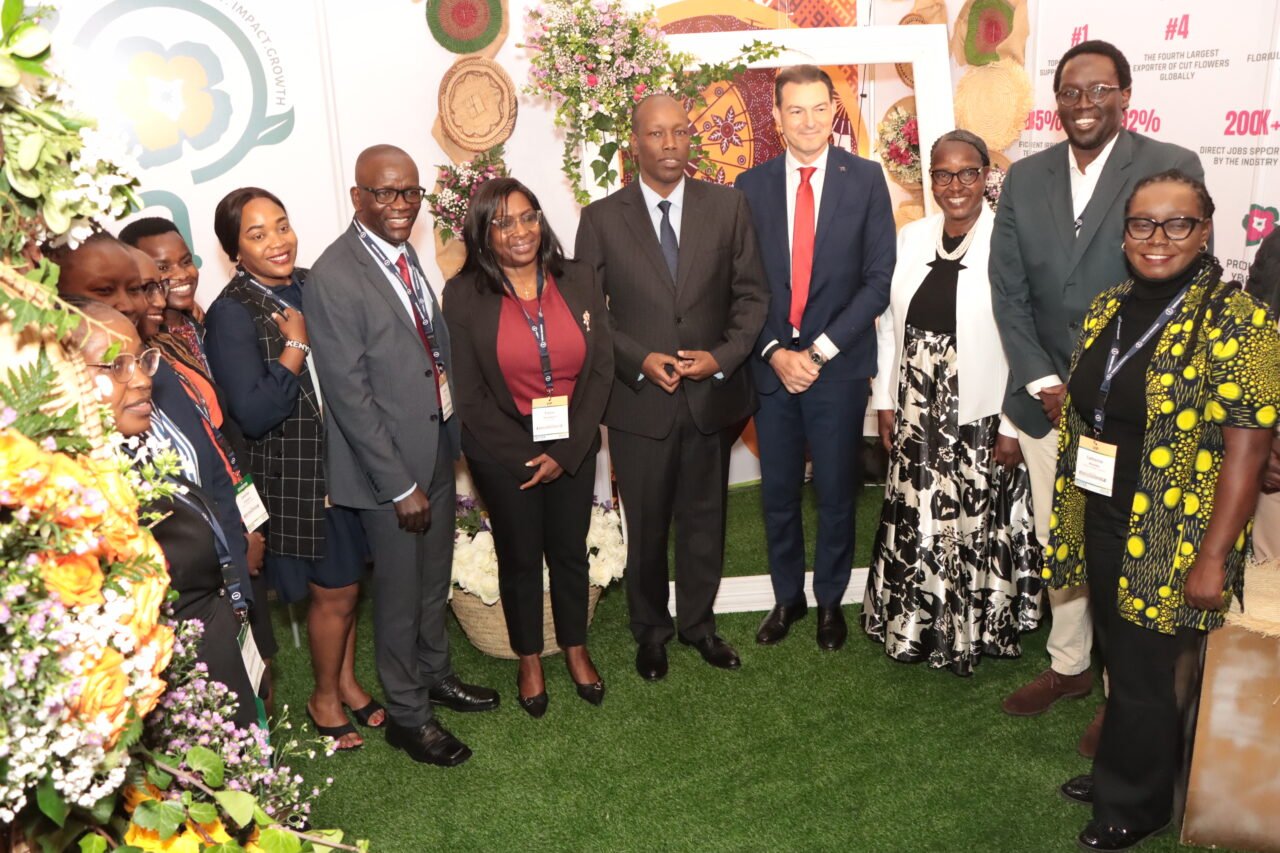
Kenya has reaffirmed its position as a global floriculture powerhouse as industry leaders, government officials, international buyers and development partners gathered in Nairobi for the opening of the 13th International Flower Trade Exhibition (IFTEX) 2026.
The three-day event, held at the Visa Oshwal Centre in Nairobi under the theme “Shaping the Future of Floriculture,” attracted a record 210 exhibitors from across the globe, reflecting growing confidence in Kenya’s flower industry despite mounting global challenges.
Speaking during the official opening, Kenya’s Cabinet Secretary for Investments, Trade and Industry, Lee Kinyanjui said the floriculture sector remains one of the country’s most important economic pillars.
“Today, Kenya is Africa’s largest flower exporter, one of the world’s leading exporters of roses and a trusted supplier to markets across Europe, the United Kingdom, the Middle East and Asia. The industry generates approximately KES 110 billion annually in export earnings, employs more than 200,000 people directly and supports millions of livelihoods across the country,” said Kinyanjui.
He acknowledged challenges facing growers, including rising freight costs, regulatory requirements and VAT refund delays, but assured stakeholders that the government was committed to addressing these concerns.
“The concerns raised by the industry regarding air freight costs, cargo capacity, VAT refunds, taxes, levies and market access are legitimate concerns. As Government, we are listening, and we are committed to working with the industry to find practical and lasting solutions,” he said.
Kinyanjui noted that sustainability would play a central role in the sector’s future, adding that Kenya had become globally respected for ethical production, environmental stewardship and traceability systems.
Conveners of the exhibition, HPP International Exhibitions Group’s Chief Executive Officer Dick van Raamsdonk described this year’s exhibition as the largest in the event’s history.
“This year, we break every previous record with 210 exhibitors under one roof. What you see is not just a flower industry show. It is the living, breathing heart of a global industry that brings colour, emotion and beauty to millions of lives daily,” he said.
Van Raamsdonk said Kenya remained well positioned to expand its reach beyond traditional export destinations.
“While our traditional markets remain vital, IFTEX 2026 marks the launching pad for new frontiers. We are aggressively looking toward the high-potential markets of North America, the Middle East, Southeast Asia and Eastern Europe,” he said.
Meanwhile, Kenya Flower Council CEO Clement Tulezi emphasized the social and economic importance of the sector.
“Flowers are jobs. Flowers are school fees. Flowers are healthcare. Flowers are empowerment,” said Tulezi, noting that the industry generates about USD 850 million annually and supports more than 200,000 jobs.
He called for greater recognition of floriculture as a strategic economic sector and urged industry partners to engage in fair pricing discussions amid rising production costs and global supply chain pressures.
The European Union also reaffirmed its support for Kenya’s floriculture industry. Speaking at the event, Filippo Amato noted that Kenya supplies more than 40 percent of flowers imported into the EU.
“The European Union remains the largest market for Kenyan flowers, with annual exports valued at more than €500 million,” said Amato.
He added that the EU was supporting the sector through the Economic Partnership Agreement and investments under the Global Gateway initiative, including potential cold-chain infrastructure projects aimed at improving export efficiency and sustainability.
The exhibition brings together growers, breeders, exporters, logistics providers, suppliers and buyers from around the world, with participants expected to explore new technologies, forge business partnerships and identify opportunities for expanding global flower trade.