

Kenya intensifies search for new coffee markets as production target set at 150,000 tonnes by 2028
By Zablon Oyugi
Kenya is intensifying efforts to secure new markets for its coffee as the government targets production of 150,000 metric tonnes by 2028, a move aimed at boosting export earnings and improving livelihoods for thousands of smallholder farmers who depend on the crop.
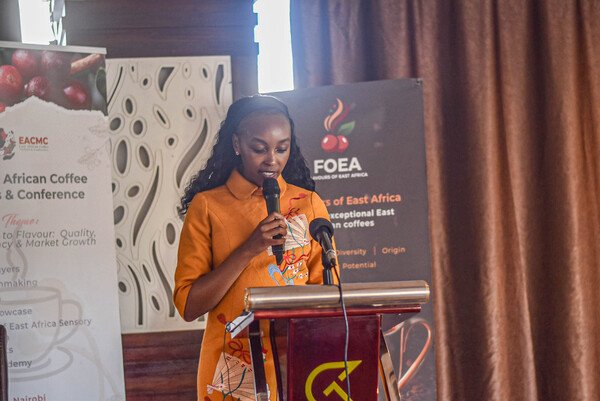
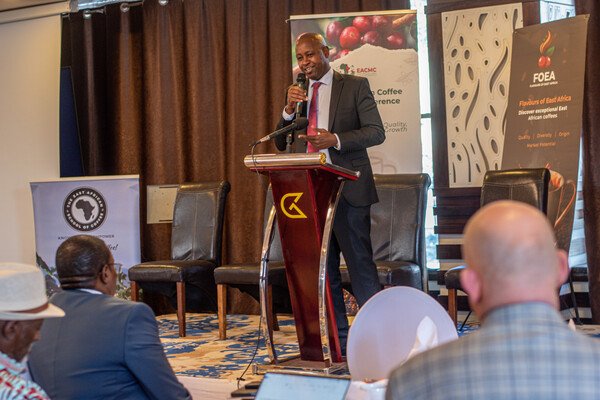
The renewed push comes as stakeholders from across the coffee value chain gathered yesterday in Nairobi during the East Africa Coffee Markets and Conference (EACMC) breakfast meeting for discussions on trade, investment and buyer partnerships designed to strengthen the competitiveness of East African coffee in global markets.
Speaking in the meeting, Patrick Kilemi, Principal Secretary (PS) for the State Department for Cooperatives said the government is determined to transform Kenya into a significant player in the international coffee trade through increased production, stronger cooperatives, better governance and expanded market access.
“On the global coffee map, we do not want to be a dot; we want to be a number that will be referenced,” Kilemi said, noting that countries such as Ethiopia and Uganda have already established strong positions in Africa’s coffee export market.
He said the production target of 150,000 metric tonnes by 2028 forms part of a broader strategy to restore growth in the sector and enhance Kenya’s competitiveness internationally.
To support the expansion, the government is scaling up interventions across the coffee value chain, including the distribution of seedlings and support for new coffee-growing regions.
“We want to make sure that every farmer who digs a coffee hole gets a seedling at the right time,” Kilemi said.
According to the PS, coffee farming has expanded significantly beyond traditional growing areas, with 35 of Kenya’s 47 counties now cultivating the crop. Seedling distribution is also being aligned with planting seasons in different regions, including the Western and North Rift regions during the March-April rains and the Mount Kenya region during the October-November planting season.
Kilemi emphasized the critical role of cooperative societies in the industry, noting that most smallholder farmers market their coffee through cooperatives.
“Coffee remains one of Kenya’s most important agricultural commodities and a major source of livelihood for hundreds of thousands of smallholder farmers. Most of these farmers market their coffee through cooperative societies, making cooperatives the backbone of the coffee value chain,” he said.
The government is implementing reforms aimed at improving governance within cooperatives, strengthening farmer representation and enhancing transparency in coffee marketing systems. Among the interventions is the digitization of cooperative operations to improve efficiency, reduce transaction costs, strengthen traceability and provide farmers with timely information.
Kilemi said global buyers are increasingly demanding quality, traceability, sustainability and responsible production practices. He urged farmers and cooperatives to invest in improved agronomic practices, better post-harvest handling, certification mechanisms and climate-resilient production systems.
“By connecting farmers directly to markets and fostering practical engagement across the value chain, this conference aligns perfectly with the Government of Kenya’s vision for a vibrant, competitive and farmer-centred coffee industry. We must place great emphasis on value addition, branding and market differentiation,” he stated.
He added that East African countries could strengthen their bargaining power, attract investment and unlock new markets by working together to promote the region’s coffee as a premium global brand.

East Africa Coffee Markets and Conference 2026
The discussions also mark the launch of preparations for the East Africa Coffee Markets and Conference 2026, which is being repositioned as a regional market-access platform connecting producers, cooperatives, exporters, buyers and investors.
Smart Farmer Africa founder and EACMC convener Bernadette Murgor said the initiative seeks to address one of the sector’s biggest challenges — linking producers to markets.
“East Africa Coffee Markets & Conference 2026 is more than a conference; it is a strategic market access platform designed to connect producers, cooperatives, exporters, buyers and investors through meaningful business opportunities,” Murgor said.
She noted that despite East Africa producing some of the world’s finest coffees, many producers remain disconnected from buyers, financing opportunities and market intelligence.
“A farmer may produce excellent coffee but remain invisible to the market. A cooperative may have strong volumes but lack the right buyer networks, market intelligence or presentation materials. A buyer may be interested in East African coffee but may not know where to begin,” she said.
Murgor added that the conference will provide opportunities for farmers to learn about emerging technologies, market trends and buyer requirements.
“We want our farmers to learn about the latest technologies, what is happening in the market and what buyers are looking for. There are farmers in the West Rift region who do not yet fully understand the best coffee-growing practices, and we want to give producers an opportunity to learn and improve,” she stated.
She said the conference aims to bridge existing gaps by fostering structured engagement among producers, buyers, financial institutions, development partners and diplomatic missions, ultimately strengthening the competitiveness of East African coffee in regional and international markets.