


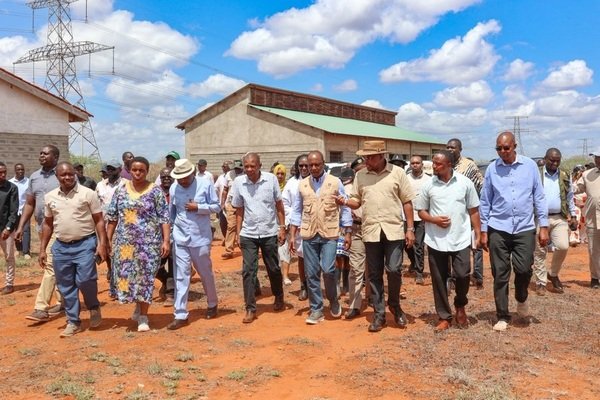
Government launches livestock centre to serve as gateway to global export markets
The Government has positioned the Bachuma National Livestock Quarantine Centre in Taita-Taveta as a strategic gateway for Kenyan livestock to access high-value international markets as the facility is handed over to private investor Blue Mountain for commercialisation.
Agriculture and Livestock Development Cabinet Secretary Sen. Mutahi Kagwe said the investment was intended to transform the livestock sector by creating jobs, expanding markets and increasing incomes for farmers and communities around the facility.
“This project is not about putting up a facility for its own sake. It is about creating jobs, opening markets and putting more money in the hands of livestock farmers and the local community,” Kagwe said.
The centre will provide quarantine, inspection and certification services for livestock destined for export, helping Kenya meet international animal-health and food-safety requirements.
According to Principal Secretary State Department for Livestock Development, Jonathan Mueke, the commercial opportunities linked to the facility could be substantial. An offtake arrangement cited during the event could generate demand for up to 100,000 cattle annually, while an order for goats and sheep from South Africa was valued at approximately KSh2 billion.
“The total opportunity unlocked through the facility was put at about KSh30 billion in potential value,” Mueke said.
Bachuma is expected to receive livestock from different parts of Kenya and potentially neighbouring countries, strengthening Taita-Taveta’s position as a regional livestock trade and export hub.
The Government is also seeking to strengthen the supply side through a proposed County Livestock Investment Company model covering 23 arid and semi-arid counties.
Under the model, each county will target 15,000 livestock farmers, with each farmer taking a KSh10,000 share. The Government would contribute KSh7,000 while the farmer contributes KSh3,000.
This would create potential share capital of KSh150 million per county and KSh3.45 billion across the 23 counties. The farmer-owned commercial vehicles are intended to aggregate livestock, facilitate access to export markets and return profits to farmers through dividends or bonuses.
Kagwe also highlighted Anitrac-Animal Identification and Traceability as an important tool for strengthening the livestock value chain. The system will enable animals to be traced to their source while providing information on their origin, vaccination and animal-health history.
The Government said traceability would improve livestock security and help Kenyan producers meet the requirements of demanding international markets.
Water infrastructure will also receive attention, with national and county governments working with ranchers to identify strategic locations for water pans and other facilities needed to sustain livestock production across Taita-Taveta’s vast rangelands.
The public-private partnership is expected to combine private capital, technical expertise and commercial efficiency with government support through infrastructure, water provision and regulation.
The Bachuma facility is therefore being positioned not only as a quarantine centre, but also as a platform for investment, regional trade and increased participation of Kenyan livestock farmers in international markets.