


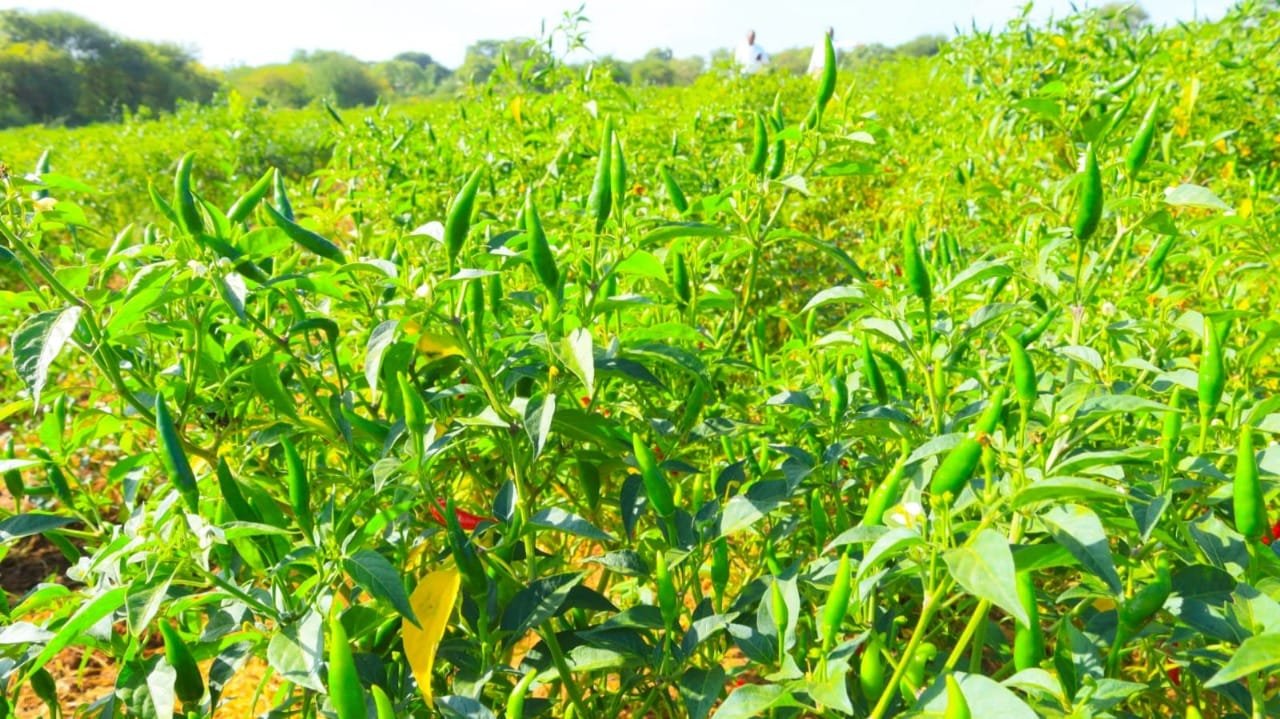
Government secures Chinese market access for dried chillies, opening new export opportunities
Kenyan farmers, processors and traders have received a major boost after the country officially secured market access for dried chillies to China, opening new export opportunities in one of the world’s largest consumer markets.
The Kenya Plant Health Inspectorate Service (KEPHIS) announced the development in a public notice dated October 16, 2026, informing farmers, exporters, processors, packers, producer organisations and other stakeholders that Kenya had secured access to the Chinese market for dried chilli exports.
In a statement shared on X, KEPHIS said the development would provide Kenyan producers and exporters with an opportunity to diversify export markets and increase trade in dried chillies.
The new market access is expected to create opportunities across the chilli value chain, potentially boosting demand for locally produced chillies while encouraging investment in processing, packaging and export-oriented production.
However, exporters seeking to access the Chinese market will be required to comply with stringent phytosanitary, food safety, traceability, processing, packaging and quality requirements established by Chinese authorities.
According to KEPHIS, exporters must first register their export-processing and packaging facilities with the General Administration of Customs of the People’s Republic of China (GACC) through KEPHIS. The facilities will be subject to inspection and approval by the Kenyan agency.
Farmers, production sites, drying facilities and packhouses must also be registered with KEPHIS and comply with applicable requirements for export certification.
Every consignment destined for China must obtain a KEPHIS Phytosanitary Certificate confirming compliance with the prescribed phytosanitary requirements.
Exporters will further be required to implement traceability systems, Good Agricultural Practices (GAP) and Integrated Pest Management (IPM), while maintaining production records for a minimum of two years.
Food safety standards will also be strictly enforced. These include compliance with pesticide maximum residue limits, aflatoxin B1 limits and heavy metal limits, alongside zero tolerance for Sudan dyes.
Dried chillies must meet microbiological requirements, including the absence of Salmonella, while moisture content must not exceed 13 per cent. Exporters must also meet prescribed packaging and labelling requirements, using clean and appropriate packaging materials.
KEPHIS has further directed exporters to ensure that consignments are free from quarantine pests of concern to Chinese authorities. These include common bean bruchid, cowpea weevil, khapra beetle, potato spindle tuber viroid, tomato brown rugose fruit virus, bacterial pathogens and broomrapes.
The agency has encouraged interested farmers, exporters, processors, aggregators and industry associations to contact KEPHIS for further guidance on registration, inspections, certification and export compliance.
The opening of the Chinese market marks a significant step for Kenya’s horticultural export sector, offering local chilli producers and traders an opportunity to expand beyond traditional markets while meeting international quality and safety standards.