


Government to buy all paddy and milled rice, pay farmers in 30 days
By Sandra Neddy
Rice farmers across Kenya are set to benefit from improved market certainty after the government pledged to purchase all paddy and milled rice offered for sale, with payments guaranteed within 30 days easing long-standing concerns over delayed payments and stocks backlogs.
The assurance comes after rice cooperatives in Mwea and other major growing regions confirmed that all locally produced rice delivered to the market has been fully taken up and paid for, marking a significant shift from previous seasons when farmers were left holding large volumes of unsold produce.
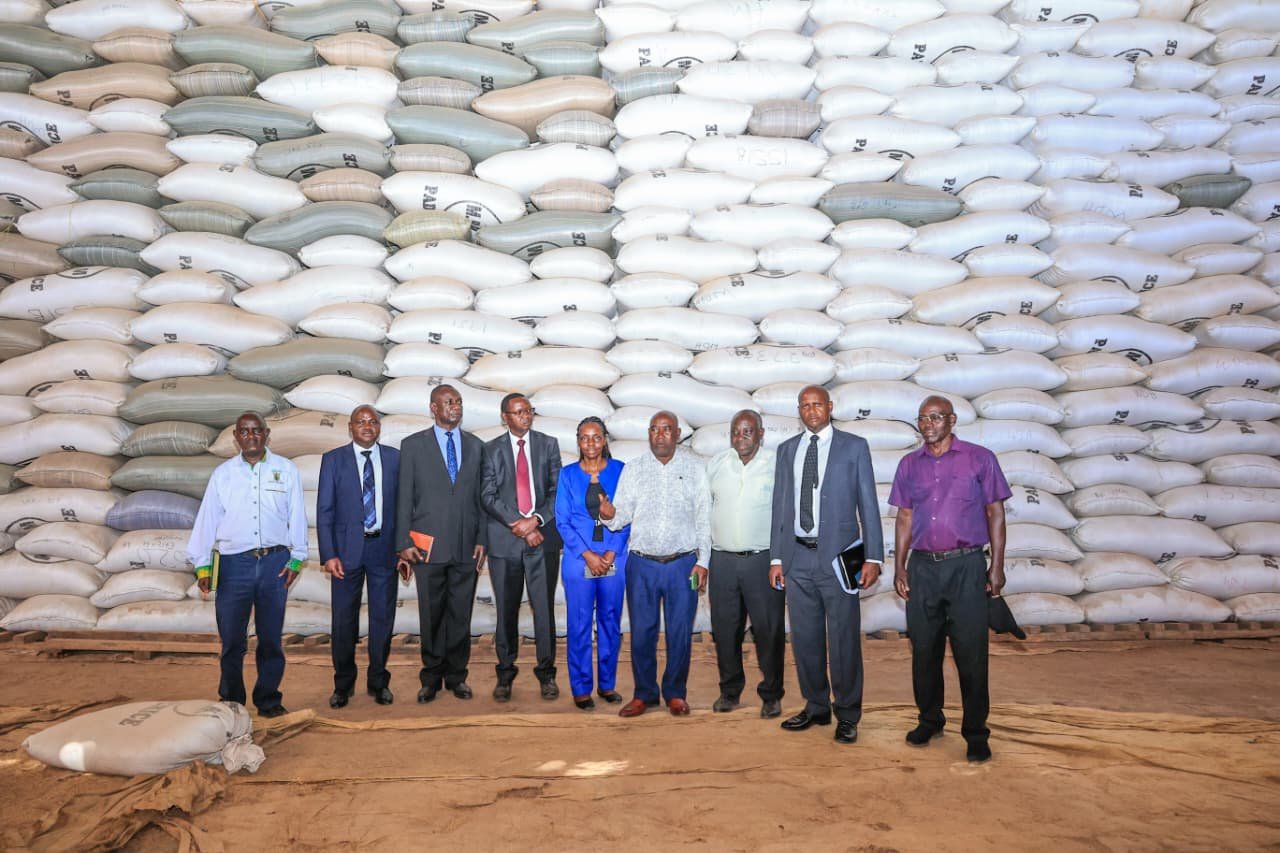
Speaking during an inspection visit to the Mwea Rice Growers Multipurpose Co-operative Society (MRGM), led by Kenya Agriculture and Food Authority Director General Dr Bruno Linyiru, alongside senior officials from the State Department for Agriculture, the National Cereals and Produce Board (NCPB) and the Kenya National Trading Corporation (KNTC), MRGM Managing Director Anthony Waweru confirmed that rice offloading and payments have proceeded smoothly, with carry-over stocks dropping to less than one per cent into 2026, down from nearly 30 per cent the previous year.
“As of December 31, all rice delivered had been paid for, and the Kenya National Trading Corporation (KNTC) is ready to take up all rice farmers bring,” Waweru said.
This move comes amid ongoing debate over rice imports and their impact on local producers, an issue that has stirred public discussion and political concern in recent months.
According to the AFA Yearbook of Statistics 2025, Kenya’s rice production has been increasing steadily as farmers expand acreage and improve yields. In 2024, rice production rose to 290,447 metric tonnes, up from 244,058 MT in 2023 a 19.1 per cent increase driven by favourable weather, expanded irrigation and government support.
Despite this growth, domestic output continues to fall far short of national rice consumption, which remains well above one million metric tonnes annually. Speaking during the visit, government officials reiterated that domestic rice production, though rising steadily, still meets less than 20% of national demand thereby making controlled imports necessary to stabilize prices without undermining farmers.
Additionally, the cooperative also dismissed claims that imports are hurting local farmers, saying that Mwea rice occupies a premium market niche that does not directly compete with cheaper imported varieties. While most imported non-basmati rice sells for Sh80 to 100 per kilo, Mwea Pishori retails at between Sh140 and 160 due to its aroma and quality.
If implemented successfully, this initiative would greatly benefit the farmers by ensuring that every available bag of locally produced rice is taken up promptly and protecting them from price shocks.
Farmers holding rice stocks have been encouraged to contact NCPB or KNTC for immediate sale.