
Heifer International launches project to strengthen feed and fodder systems in Kenya’s dairy
By Zablon Oyugi
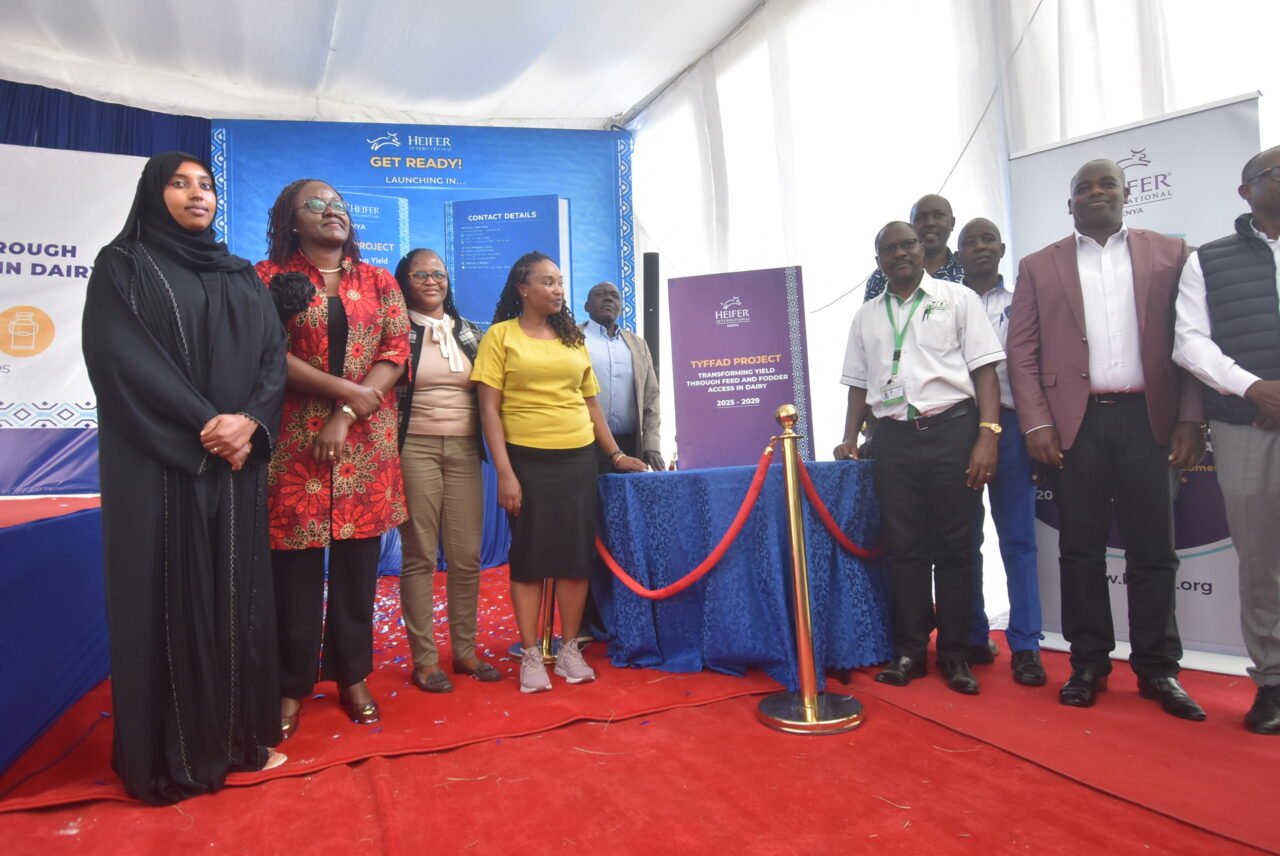
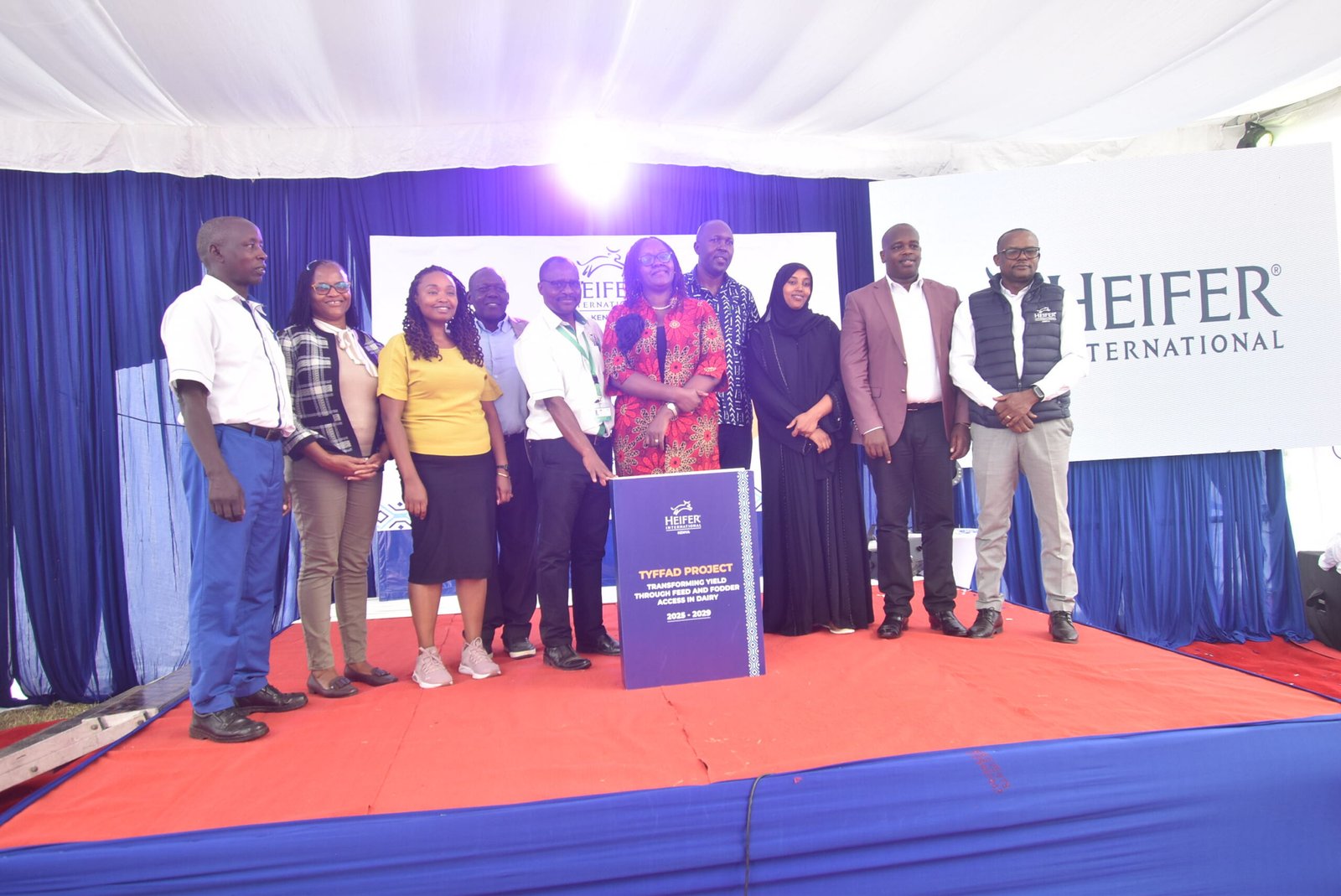
Heifer International Kenya has launched the Transforming Yield through Feed and Fodder Access in Dairy (TYFFAD) project, a four-year initiative expected to benefit more than 50,000 smallholder farmers by addressing systemic feed and fodder constraints that limit milk yields across the country.
The project will be implemented in seven key dairy-producing counties, Uasin Gishu, Nandi, Elgeyo Marakwet, Trans Nzoia, Laikipia, Nakuru, Kiambu, and Narok, with a focus on women and youth, who contribute significantly to the sector but remain largely excluded from land ownership, credit, and market opportunities.
Kenya’s dairy sector supports more than 1.8 million smallholder households and contributes 4.5 per cent of national GDP, 14 per cent of agricultural GDP, and 44 per cent of livestock GDP. Despite this, productivity remains below potential, with average yields at approximately 7.5 litres per cow per day, largely due to persistent challenges in feed and fodder systems.
Speaking on behalf of the Principal Secretary, State Department of Livestock Development, Hon. Jonathan Mueke, Ms Midina Yattani affirmed that feed and fodder are the most critical constraints to improving dairy productivity in Kenya.
“The majority of milk is produced by smallholder farmers operating at low levels of productivity,” she said. “The root cause is the lack of adequate and quality feed. Addressing this gap is essential to improving farmer incomes, strengthening resilience, and unlocking the full potential of the dairy sector.”
She highlighted ongoing government efforts to strengthen the sector, including the establishment of a multi-stakeholder platform for feed coordination, development of the Livestock Bill, and investments in research through the Kenya Agricultural and Livestock Research Organisation (KALRO) to improve access to quality, climate-resilient fodder varieties.
Across dairy-producing regions, farmers are producing fodder, but gaps in storage, access, and market coordination continue to limit its value. During the rainy season, surplus production often forces farmers to sell immediately at low prices because of limited storage capacity. In the dry season, feed becomes scarce and expensive, creating a cycle that affects productivity and incomes.
Wairimu Munyinyi-Wahome emphasised the need for a coordinated, partnership-driven approach.
“For many farmers, the challenge is not effort; it is access. Access to quality feed, reliable systems, and functioning markets,” she said. “We are also seeing a clear imbalance between supply and demand, and the need for these processes to be more facilitative of the needs of smallholder farmers. Fodder is abundant during the rainy season but not well conserved, and then becomes scarce when demand remains high, directly affecting productivity and costs.”
The project adopts a market systems approach, anchored in collaboration with national and county governments, the private sector, farmer organisation agribusinesses, development partners, and research institutions, including the International Livestock Research Institute (ILRI) and the Kenya Agricultural and Livestock Research Organisation (KALRO). “Addressing this requires strong partnerships across government, the private sector, cooperatives, and development actors to ensure farmers can access services in a connected and practical way,” Wairimu added.
Waweru Nyangi, a fodder producer in Rongai, Nakuru County, highlighted the realities farmers face. “Farmers are often forced to sell immediately after harvest because they lack storage,” he explained. “Yet during the dry season, they must buy feed at much higher prices.” This imbalance is reflected in market prices, where a bale of hay can cost as little as KSh 100–150 during periods of surplus, rising to between KSh 300 and 500 during dry seasons.
These challenges go beyond individual farmers and affect the entire system. Many farmers struggle with limited access to mechanisation, high input costs, and unreliable markets. Financing options are also often not well-suited to their needs. While services like mechanisation, quality seeds, advisory support, and financing are available, they do not always reach farmers when they need them most.
The TYFFAD project aims to tackle these challenges by improving how feed and fodder systems work, from how feed is produced and stored to how it reaches farmers and markets. It will support farmers to better preserve feed, access quality inputs, and connect to more reliable markets. The project will also explore practical financing options, expand access to mechanisation, and use digital tools to provide farmers with timely advice. A key priority is creating more opportunities for women, youth, and emerging agribusinesses.
By improving how these systems work, the project seeks to reduce losses after harvest, ensure feed is available throughout the year, and help farmers earn more from their dairy production. Heifer International notes that lasting progress in the dairy sector will depend on continued collaboration among government, private sector players, research institutions, and farmer organisations.