


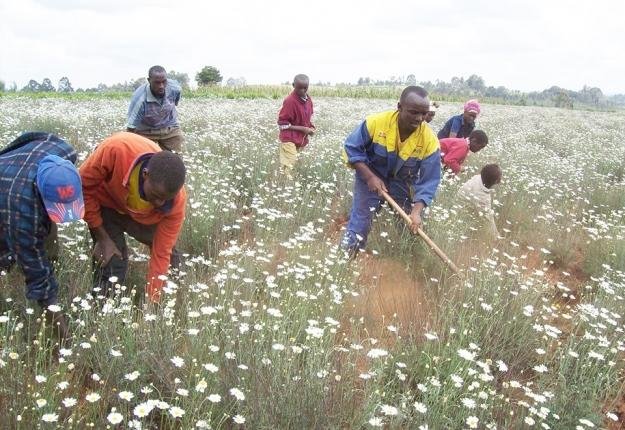
Kenya moves closer to leasing pyrethrum processor as cabinet prepares key decision
The government is inching closer to a major policy shift in the revival of Kenya’s pyrethrum sector, with the Cabinet expected to soon deliberate on a proposal to lease the Pyrethrum Processing Company of Kenya (PPCK) to a private operator.
Health Cabinet Secretary Sen. Mutahi Kagwe, who oversees PPCK, told the Senate that all systems are ready for Cabinet consideration, signalling what could be a decisive turn toward private-sector-led revitalisation of the once-thriving industry.
Kagwe revealed that the plan has the full backing of PPCK employees, who overwhelmingly support private investment as the only viable path to restoring efficiency, competitiveness, and long-term profitability.
Unsustainable finances and mounting debt
The CS painted a bleak picture of PPCK’s current state, describing its financial performance as “unsustainable.” The agency generates just KSh 35 million annually, with its best year reaching KSh 60 million — far below what is needed to run operations or invest in the sector’s growth.
“There is simply not enough money to sustain the organisation itself,” Kagwe told the Senate, noting that the company has received no funding for research, a critical component for rejuvenating the pyrethrum value chain.
Farmers have not been spared by the financial strain. PPCK owes growers KSh 10 million for deliveries made between August and October. Kagwe said the government is moving to settle these arrears immediately to protect farmers and restore trust.
But the most significant burden remains PPCK’s KSh 3.5 billion debt, owed to suppliers and in staff pension arrears. Kagwe confirmed that although there was a proposal to sell some assets to offset the debt, the process stalled due to delayed valuation reports, and no assets have been sold.
Leasing model seen as path to revival
With PPCK unable to meet its obligations or fund sectoral development, Kagwe said the leasing model offers a sustainable, long-term solution. However, the government must first “clean up PPCK’s balance sheet,” complete a fresh valuation of assets, and undertake due diligence before a private operator takes over.
He emphasized that Cabinet approval would pave the way for a structure that mirrors successful models in competitive, privately run agricultural industries.
Government interventions already underway
Even as the debate continues, the Ministry of Agriculture has rolled out several interventions across the pyrethrum value chain to support recovery. These include:
- Distribution of clean planting materials
- Expansion of extension services
- Alignment of local production standards with international regulatory requirements to unlock export markets
Kagwe said these measures are meant to prepare farmers and processors for a more competitive, market-driven future.
Commitment to farmers and sector stability
Despite PPCK’s deep-seated challenges, the CS reassured the Senate that the government remains committed to stabilizing farmer payments, protecting growers’ interests, and positioning the pyrethrum industry for global competitiveness.
“The current structure cannot deliver the sector’s revival,” he said, maintaining that a modernized, private-sector-driven model—anchored by strong government oversight—offers the best chance to restore Kenya’s position as a world leader in natural pyrethrum production.
The Cabinet is expected to deliberate on the leasing proposal in the coming days, potentially marking the beginning of a new chapter for one of Kenya’s most iconic cash crops.