


Kenya shifts to soil-health-centered agricultural transformation
By Sandra Neddy
Thousands of Kenyan farmers could soon benefit from a new government strategy that places soil health at the centre of agricultural transformation, a move aimed at improving yields, cutting fertilizer costs and building resilience against climate change.
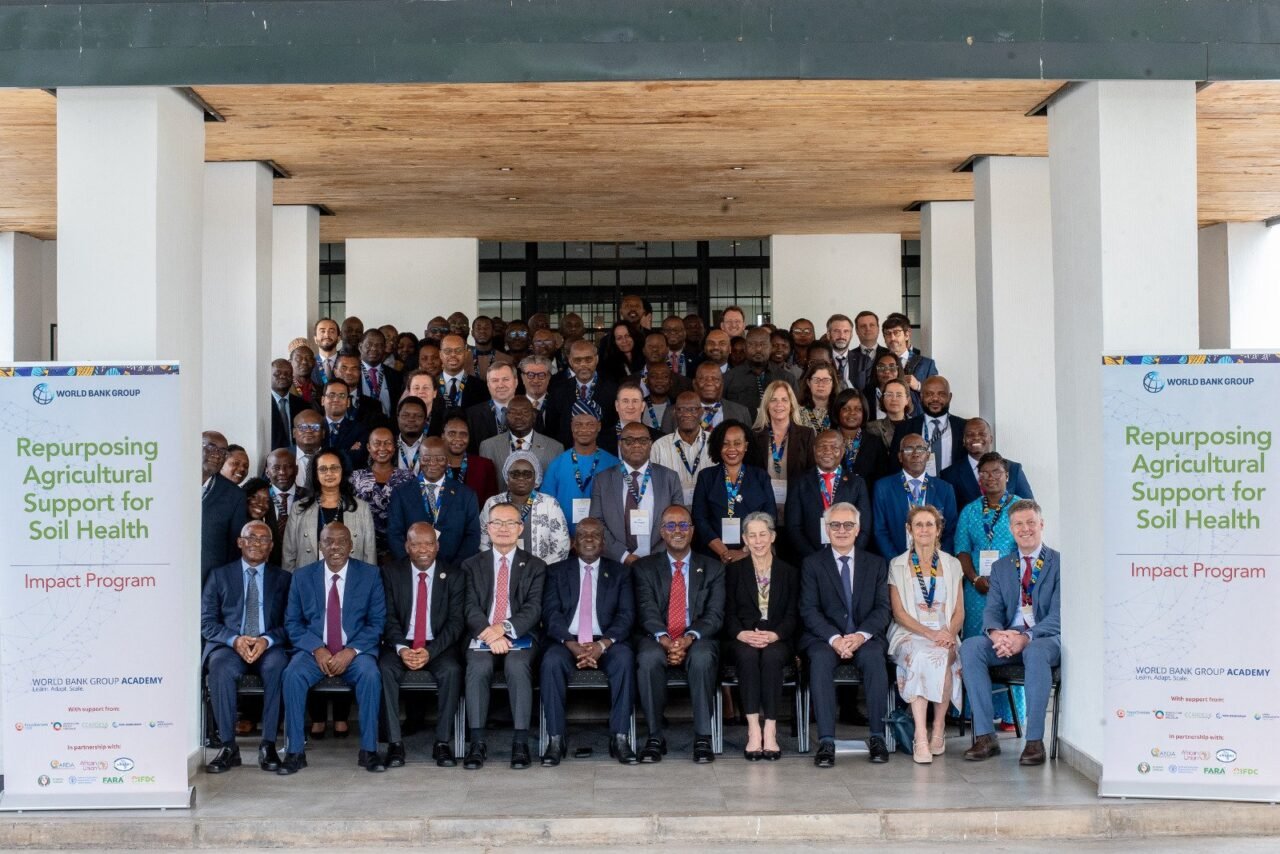
Unveiled by the World Bank Group, the Impact Program on Repurposing Agriculture Support for Soil Health aims to help countries like Kenya transition from costly blanket fertilizer subsidies to targeted, soil-health-driven agricultural support systems.
The programme focuses on strengthening soil data systems, improving extension services, promoting balanced nutrient management and ensuring public funds are used more efficiently to boost farmer productivity, climate resilience and long-term soil sustainability.
Speaking during the Impact Program on Repurposing Agriculture Support for Soil Health forum, Principal Secretary for Agriculture Dr. Paul Ronoh reaffirmed Kenya’s commitment to shifting from blanket fertilizer subsidies toward a more targeted, science-driven approach focused on restoring soil fertility.
He said the new direction aligns with the Africa Fertilizer and Soil Health Action Plan under the Nairobi Declaration, emphasizing sustainable productivity, climate resilience and more prudent use of public resources to directly benefit farmers.

What This Means for Farmers
For years, many smallholder farmers have relied on subsidized fertilizers to increase production. However, experts say fertilizer alone cannot solve declining yields if soil health is poor. According to the Status of the World’s Soil Resources Report published by the Food and Agriculture Organization, nearly a third of the world’s soils are moderately to highly degraded due to erosion, nutrient depletion, acidification and other forms of mismanagement and applying fertilizer alone, without restoring soil organic matter and correcting nutrient imbalances, often results in diminishing returns for farmers and continued yield decline.
Under the new strategy, farmers are expected to benefit from expanded soil testing and mapping services that will help identify the specific nutrient needs of their land. The government is also digitizing soil data to guide precise fertilizer application, enabling farmers to use the right type and quantity of inputs rather than relying on a one-size-fits-all approach.
In addition, the shift toward balanced nutrient management and more targeted government support based on actual soil conditions is designed to improve yields, reduce input costs and promote long-term soil fertility.
The government has already finalized a Fertilizer and Soil Health Strategy and begun integrating soil data systems to guide smarter input use. According to Dr. Ronoh, this approach will help farmers use the right type and amount of fertilizer for their specific soil conditions thereby reducing waste, lowering costs and improving productivity sustainably.
Why the Shift Is Necessary
Despite heavy public spending on fertilizer subsidies, Kenya continues to face declining soil quality, climate-related land degradation and rising production costs. Several factors continue to limit the effectiveness of past support programs.
Broad subsidy schemes have placed significant pressure on public finances, while weak integration of soil data into advisory services and limited extension capacity have hindered farmers from receiving timely, practical guidance.
Additionally, Inefficiencies in input markets, coupled with climate-related challenges such as erratic rainfall and ongoing soil degradation have further constrained productivity and reduced the impact of interventions aimed at improving yields and long-term soil health.
Dr. Ronoh urged stronger collaboration with the World Bank to finance a national digital soil information system, strengthen agricultural extension services and support private-sector input markets. He also emphasized the need to restructure existing agricultural projects so they better address farmers’ immediate needs while building long-term resilience.
The government’s new direction signals a transition from generalized subsidies to targeted, data-driven support, a move officials say will safeguard public spending while delivering better results at farm level.
Bigger Picture
If successfully implemented, the soil-health-centered model could increase farmer incomes, restore degraded land and build climate-resilient farming systems across the country.
By focusing on soil as the foundation of productivity, Kenya aims to shift from short-term yield boosts to long-term agricultural sustainability a change that could redefine support for millions of smallholder farmers.