


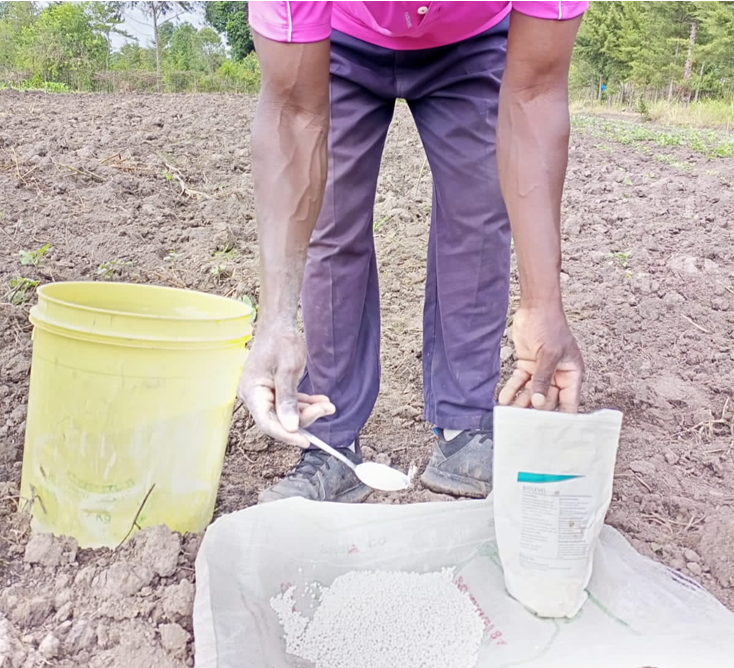
Bioline and Biolevel partner to help Kenyan farmers get more from every bag of fertiliser
By Zablon Oyugi
What happens in a narrow strip of water thousands of kilometres away can determine how much a farmer in Eldoret spends on fertiliser.
In recent months, tensions around the Strait of Hormuz, a shipping route that carries roughly a third of the world’s fertiliser trade, have highlighted how vulnerable agricultural input markets remain. For countries like Kenya, which import most of their fertiliser, disruptions in global supply chains quickly translate into higher costs on the farm.
Against this backdrop, Biolevel, a global developer of microbial biofertilizer technologies, has entered into a strategic distribution partnership with Bioline Agrosciences Africa to introduce a new category of biological crop nutrition solutions to Kenyan farmers. The agreement marks Biolevel’s entry into the Kenyan market and expands Bioline’s portfolio beyond biological crop protection into crop nutrition.
Under the partnership, Bioline Agrosciences Africa will distribute Biolevel‘s microbial crop nutrition products across Kenya, with plans to expand into East and Southern Africa. The collaboration follows several seasons of local field evaluations, where the products demonstrated consistent performance under Kenyan growing conditions.
The timing reflects a challenge facing farmers across the region. Fertiliser remains one of the largest production costs in agriculture, accounting for as much as 30 to 50 percent of total costs depending on the crop and production system. While governments have invested heavily in subsidy programmes to improve access, many farmers are finding that applying more fertiliser does not always deliver proportionally higher yields.
Across major maize-growing regions, fertiliser use has increased steadily over the past decade, yet productivity gains have often lagged behind expectations, with yields in many areas remaining below two tonnes per hectare. Some farmers now apply higher volumes each season simply to maintain previous levels of production. The issue is not always access to nutrients. Increasingly, it is how efficiently crops are able to use them.
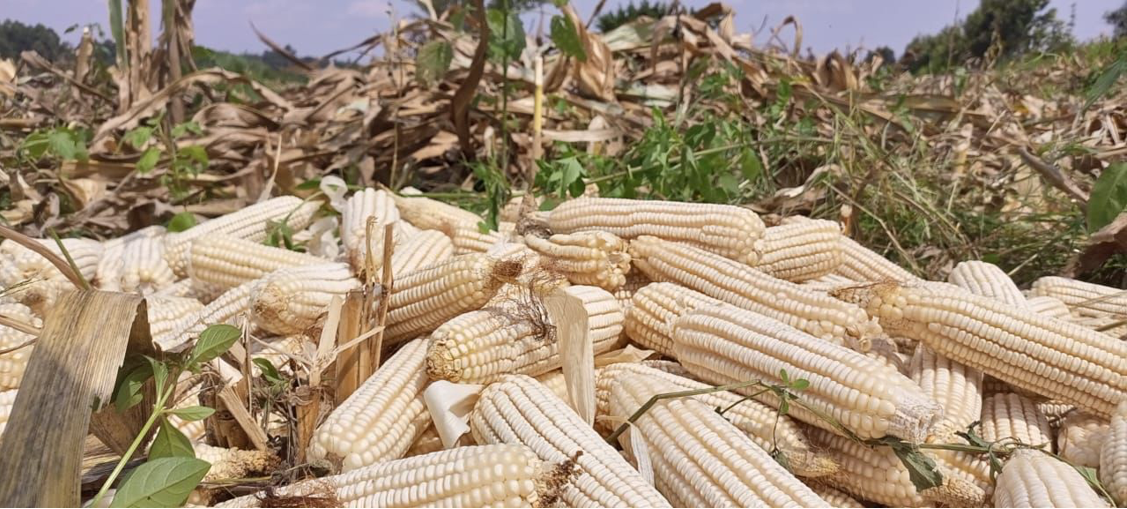
Biolevel’s technology is designed to address that challenge. Rather than supplying nutrients directly, the company’s microbial products help plants access nutrients already present in the soil or applied through conventional fertilisers. When applied at the seed stage, beneficial microorganisms support root development and stimulate natural processes such as nitrogen fixation and nutrient solubilisation, improving nutrient-use efficiency throughout the crop cycle.
In local field evaluations, the technology demonstrated the potential to reduce fertiliser requirements by between 15 and 30 percent while maintaining expected yields. In some cases, yields improved even as fertiliser use declined.
For farmers, the implications are significant. A reduction in fertiliser use can lower production costs immediately while reducing exposure to future price volatility. For a maize farmer spending thousands of shillings per acre on fertiliser each season, improved efficiency can free up resources for better seed, crop protection, irrigation, or farm expansion.
The partnership also reflects a broader shift taking place across global agriculture. Biological agricultural inputs have become one of the fastest-growing segments of the crop input market as growers look for ways to improve productivity while managing costs, strengthening soil health, and reducing environmental pressure. Increasingly, biological nutrition products are being used alongside conventional fertilisers rather than replacing them.
For Bioline Agrosciences Africa, the addition of biological nutrition strengthens an integrated approach that already includes biological crop protection solutions. Farmers are increasingly looking for systems that connect pest management, soil health, and crop nutrition rather than treating each challenge separately.“With the addition of Biolevel’s microbial biofertilizers, we can now offer a more comprehensive integrated farm management approach,” said Barnaba Rotich, Head of Commercial for Africa and the Middle East at Bioline Agrosciences.
Kenya’s fertiliser subsidy programme has improved affordability for many growers, but rising global uncertainty continues to expose the risks of relying solely on increasing input volumes. Supply chain disruptions, energy price fluctuations, and geopolitical tensions remain capable of reshaping agricultural economics with little warning.
In that environment, simply making fertiliser cheaper may not be enough. For Kenyan farmers operating under tightening margins and growing uncertainty, the next breakthrough may not come from applying more nutrients, but from helping crops make better use of the nutrients already available.