


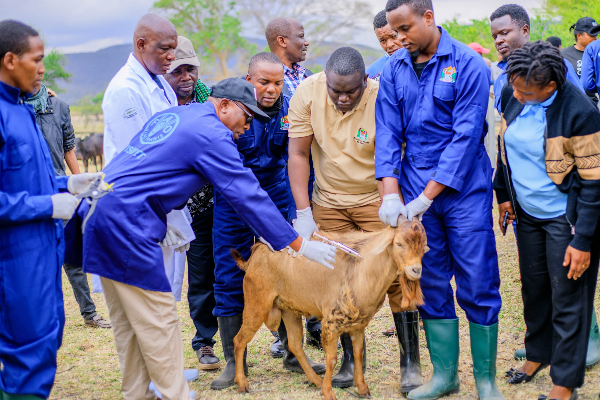
Kenya vaccinates 10 million livestock in push for modern farming and food security
Kenya has vaccinated more than 10 million livestock in a nationwide campaign aimed at curbing animal diseases and accelerating the country’s shift toward modern, commercially driven farming systems.
The vaccination drive, spearheaded by the government through the Ministry of Agriculture and Livestock Development, targets diseases that have long undermined productivity and threatened food security.
Authorities say the campaign is part of broader efforts to modernize livestock farming, improve farmers’ incomes, and strengthen Kenya’s agricultural exports.
According to reports, the exercise has reached millions of cattle, goats, sheep, and other livestock across several counties, with veterinary officers working alongside local administrations and livestock farmers.
The campaign focuses on preventing outbreaks of diseases such as foot-and-mouth disease, lumpy skin disease, and peste des petits ruminants (PPR), which have caused significant economic losses in the livestock sector in recent years.
Government officials say widespread vaccination is expected to improve animal health, enhance meat and dairy production, and reduce losses suffered by pastoralist communities and smallholder farmers.
The initiative comes at a time when Kenya is intensifying efforts to transform agriculture through technology, disease control, and climate-smart farming practices.
Livestock production remains one of the country’s key agricultural activities, supporting millions of households and contributing significantly to the national economy.
Agriculture experts have welcomed the move, saying disease prevention is critical to improving food systems and increasing access to regional and international markets.
Officials involved in the campaign noted that healthier animals would enable farmers to increase productivity while lowering veterinary treatment costs associated with recurring disease outbreaks.
They added that vaccination programs also strengthen Kenya’s preparedness against transboundary animal diseases that can disrupt trade and threaten food security.
The campaign has also been linked to the government’s broader modernization agenda, which includes digitized extension services, improved animal breeds, irrigation expansion, and access to farm inputs.
Authorities believe integrating disease control measures with modern farming methods will help farmers become more resilient to climate shocks and market disruptions.
Farmers in several regions have reportedly responded positively to the vaccination exercise, with many expressing optimism that healthier livestock will translate into better incomes and more stable livelihoods.
Livestock farming is particularly important in Kenya’s arid and semi-arid regions, where pastoralism remains a major source of income. Experts say regular vaccination campaigns are essential in protecting herds from devastating outbreaks that can wipe out household wealth and destabilize local economies.
The government has urged farmers to cooperate with veterinary officers and ensure their animals are vaccinated as scheduled. Officials also emphasized the importance of continued surveillance and farmer education to sustain gains made through the campaign.
As Kenya pushes to modernize agriculture and enhance food security, the livestock vaccination exercise is being viewed as a major step toward building a more productive and disease-resilient farming sector capable of supporting economic growth and rural livelihoods.