



Kenya’s flower sector pushes for policy relief as global disruptions raise costs
Kenya’s floriculture industry remains one of the country’s strongest export success stories, but rising freight costs, fuel pressures, delayed VAT refunds and global supply disruptions are testing the sector’s resilience.
By Smart Farmer Writer
Kenya’s flower sector remains one of the country’s most respected export industries, but industry players are warning that rising costs and global disruptions are putting increasing pressure on growers, exporters and workers across the value chain.
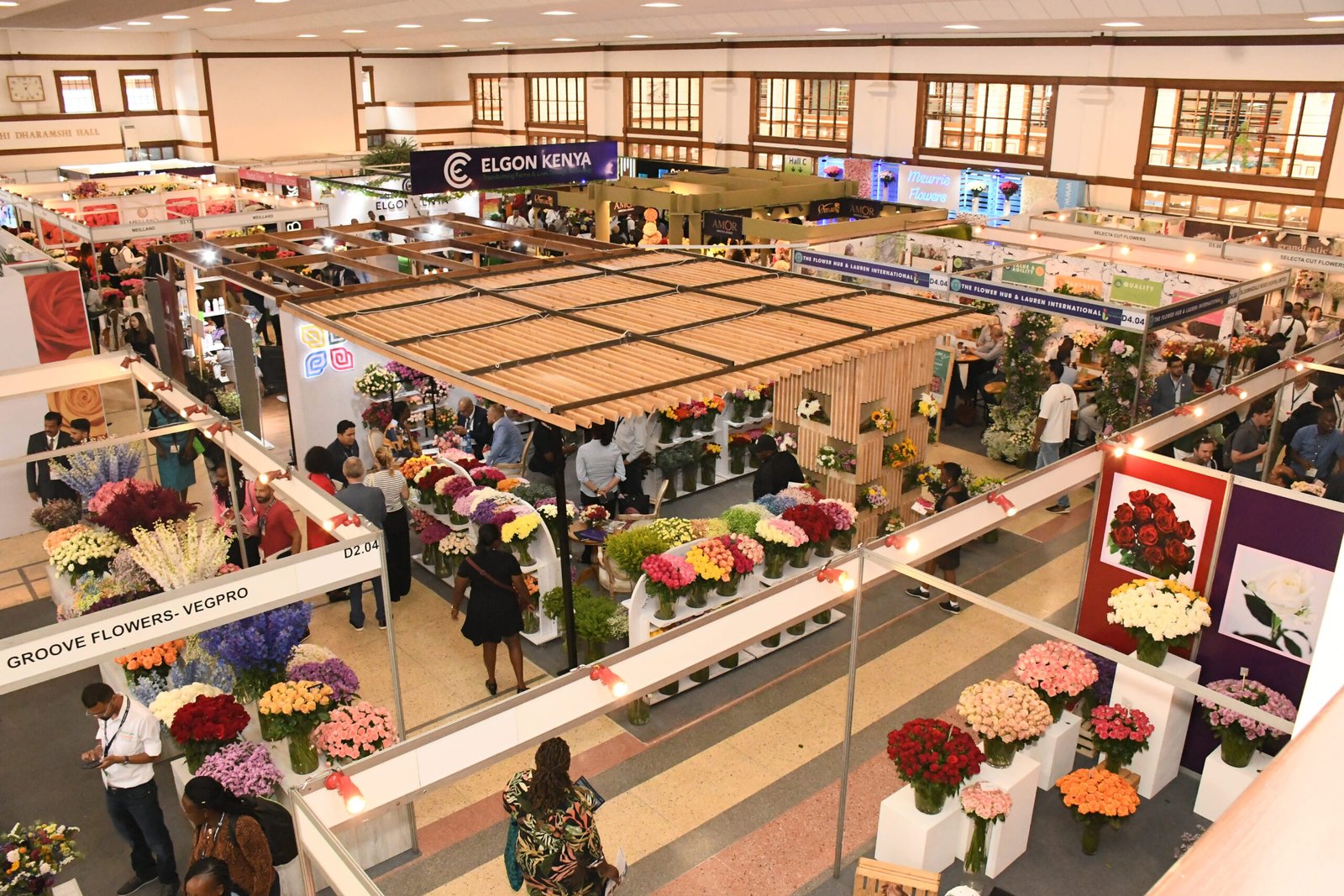
Speaking during a pre-IFTEX 2026 press briefing yesterday (May26), the Kenya Flower Council said the sector remains globally competitive, sustainable and reliable, but is currently operating in one of the most difficult environments since the COVID-19 pandemic.
“Today, we are not merely speaking about flowers. We are speaking about livelihoods. We are speaking about foreign exchange earnings. We are speaking about sustainability,” said Ms Lina Jamwa, Membership Engagement and Communications Manager, in remarks delivered on behalf of KFC CEO Clement Tulezi, adding that the sector is also central to women empowerment, climate resilience and Kenya’s place in the global economy.
The concern is that a strong and strategic sector is being forced to absorb shocks that could affect jobs, exports, rural livelihoods and foreign exchange earnings if not addressed quickly.
Kenya’s flower industry generated approximately Ksh110 billion in export earnings in 2025, equivalent to nearly USD845 million. The sector contributes about 1.5 per cent directly to Kenya’s GDP and supports more than 200,000 direct jobs, while sustaining over one million livelihoods across farms, packhouses, logistics, cargo handling, retail and rural service economies.
Women make up more than 60 per cent of the workforce in the flower industry, making floriculture one of Kenya’s most important platforms for rural employment and women’s economic empowerment.
“This means the flower sector is not simply an export industry. It is one of Kenya’s largest platforms for social and economic empowerment, particularly in rural communities,” Jumwa said reading the speech.
Global tensions
According to the Council, global tensions linked to the Iran–U.S. conflict and wider instability in the Middle East have disrupted supply chains, increased fuel prices, affected cargo availability and pushed up freight costs. For a highly perishable product such as flowers, even a short delay can lead to major losses.
Air freight, which is the lifeline of Kenya’s flower export business, has reportedly risen from about USD3.10 per kilogramme to nearly USD5.00 per kilogramme, an increase of more than 60 per cent within a short period. During peak periods, freight alone can account for between 40 and 60 per cent of total export costs.
The Council also warned that approximately USD4 million worth of flower exports are currently at risk every week due to freight and logistics pressures.
At the same time, fertiliser prices have reportedly risen by about 25 per cent within one week, while production costs across farms have increased by between 20 and 30 per cent. Some farms have experienced revenue declines of up to 75 per cent due to shipment delays and perishability losses.
Matatu strike
The recent matatu operators’ strike in Kenya also pointed to the wider pressure that fuel and transport costs are placing on the economy. Although the strike was not specific to floriculture, it highlighted the importance of smooth transport systems for time-sensitive sectors. For flower farms, movement is critical: workers must reach farms, inputs must arrive on time, and produce must get to Jomo Kenyatta International Airport within strict timelines.
Despite these pressures, Kenya’s flower industry continues to demonstrate resilience. The country exports flowers to more than 60 countries and remains Africa’s largest flower exporter, the leading exporter of cut flowers into the European Union, and one of the world’s leading exporters of roses.
About 70 per cent of Kenya’s flower exports go to the European Union, while markets in the Middle East and Asia continue to grow. This global position has been built over four decades through investment, innovation, professionalism, sustainability and reliable logistics.
“This success did not happen by accident. It has been built over four decades through investment, innovation, professionalism, sustainability, and the confidence that global buyers continue to place in Kenya,” the Council said.
Competitive advantage
Kenya’s competitive advantage remains strong. The country’s high altitude, equatorial climate, fertile soils and year-round sunshine allow growers to produce flowers with superior stem quality, vibrant colours and longer vase life. The sector has also invested heavily in technology, including advanced greenhouse systems, digital traceability platforms, precision irrigation and world-class post-harvest handling.
Sustainability has also become a key strength. Through the Kenya Flower Council’s Flowers and Ornamentals Sustainability Standard, commonly known as F.O.S.S., the sector has strengthened worker welfare, water conservation, integrated pest management, renewable energy adoption, traceability, climate-smart farming and biodiversity conservation.
According to the briefing, over 92 per cent of member farms now apply integrated pest management systems, more than 85 per cent use efficient irrigation technologies, and over 60 per cent have adopted renewable energy solutions.
“Kenya has chosen not to resist these questions, but to lead in answering them,” the Council said, referring to growing global buyer concerns around worker welfare, water use, environmental protection, ethical production and carbon footprint.

Urgent government intervention
However, the Council says urgent intervention is needed to protect this progress. Among the priority measures being proposed are the release of more than Ksh10 billion in outstanding VAT refunds, temporary tax relief on fertilisers and critical agricultural inputs, and rationalisation of statutory levies, including the KETRADE UCR levy and KEBS Standards levy.
If current conditions persist over the next 30 to 60 days without intervention, the sector could face a decline in export volumes of up to 20 per cent, export losses exceeding USD15 million per month, potential loss of up to 50,000 jobs, closure of small and medium-sized farms, and loss of market share to competitors such as Colombia, Ecuador and Ethiopia.
“This is no longer simply an industry concern. This is now a national economic issue,” the CEO warned.
The message to government is therefore clear: timely support today will cost far less than the economic damage that could come from reduced exports, job losses and weakened investor confidence tomorrow.
“The economic logic is straightforward. The cost of intervention today is far lower than the cost of sector collapse tomorrow,” the Council said.
For international buyers, Kenya remains reliable, competitive and open for business. For policymakers, the sector is asking for practical support to protect one of the country’s strongest agricultural export brands. For workers and growers, the flower industry remains a vital source of livelihoods and opportunity.
“Kenya is not simply participating in global floriculture, Kenya is leading it,” Mr Tulezi said. “With the right partnerships, supportive policies, strategic investments, and continued collaboration, Kenya can become the undisputed global leader in sustainable floriculture.”